
Welcome to book launch 12th of november!
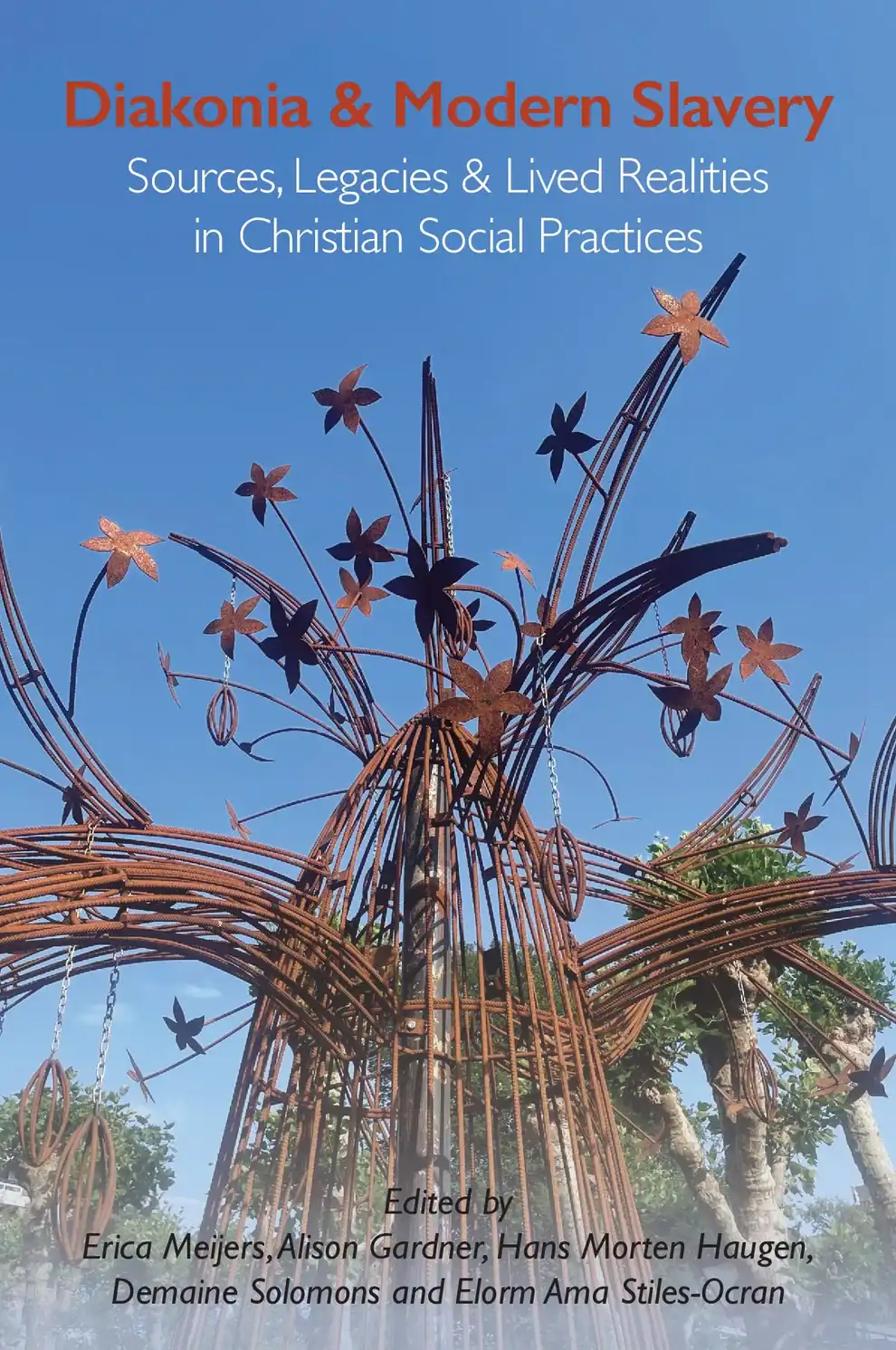
Until now there are no books adressing the work of churches and diaconical actors against modern slavery. The new book Diakonia and Modern Slavery is the first book to adress these aspects, in both national and transnational contexts.
One of the five editors phd. Elorm Ama Stiles-Ocran, highlight how faith communities are «more than equipped» to together engage with those affected by modern forms of slavery in society.
How have you worked with this book?
We (as editors) realized that there is a lot of ongoing work or literature on modern slavery. We also noted there is a plethora of literature on diakonia. However, what we saw missing was that these two fields or disciplines have not engaged each other much.
The idea was, therefore, to bring a diversity of researchers (young and old) and practitioners from around the globe to open up this interdisciplinary conversation, which explains the rich diversity of the authors and contents of the book. We did not also attempt a general definition of modern slavery, which we thought might be exclusive and limiting. But we underline that modern slavery constitutes exploitation in all forms. So, we left individual authors to define what they understand constitutes modern slavery in the contexts from which they write.
It can be used in educational settings by students, researchers, teachers, and lecturers, to educate, learn, and to build on knowledge in or between these two fields.
Who is this book intended for?
Considering the expanse of knowledge in this book, this book is a must-read for all. It can be used in educational settings by students, researchers, teachers, and lecturers, to educate, learn, and to build on knowledge in or between these two fields.
The knowledge, I would say, also offers some framework for practitioners and/or diaconal actors to responsibly act in such areas that may appear as blind spots in their social engagements. This book serves as a knowledge base and relevant tool and resource that diaconal actors or practitioners can use as a guide when engaging in contemporary society.
We ask what faith communities are doing or not doing about the modern forms of slavery
What aspects of the book specifically adress how the faith communities work?
Diakonia and Modern Slavery highlights knowledge on the biblical, theological, and legal resources for social action. It also provides knowledge on the legacies of colonialism by attempting to draw correlations between contemporary and historical slavery; and uncovers the lived realities of modern slavery by centering the voices and experiences of those most affected in diverse communities. There is also a section where we ask what faith communities are doing or not doing about the modern forms of slavery as characterized in this book. And I think that with this breadth and depth of knowledge, faith communities are more than equipped to together engage with those affected in society for social change.
(…) modern slavery is a complex phenomenon, so we are careful to not attribute it to a one causal factor or driver
One other important aspect in this book (perhaps, this might also relate or not to your question on how we have worked with the book) I wish to point out is the intersectionality framework we, as authors, relied on. This is to say that, we understand that modern slavery is a complex phenomenon, so we are careful to not attribute it to a one causal factor or driver. Due to the changing nature of society and the emergence of new forms of social issues and challenges, I think that using intersectionality frameworks can be useful in interdisciplinary research and practice.
Notes
This is the fifth book in «VIDs diakoniserie» at Regnum books, originally a part of Regnums «Mission Series»:
2014 https://www.regnumbooks.net/products/diakonia-as-christian-social-practice-ebook
2016 https://www.regnumbooks.net/products/diakonia-in-gender-perspective
2019 https://www.regnumbooks.net/products/the-diaconal-church
2022 https://www.regnumbooks.net/products/developing-just-and-inclusive-communtiies
2026 https://www.regnumbooks.net/products/diakonia-and-modern-slavery
Digni has economically supported all the books in this series.